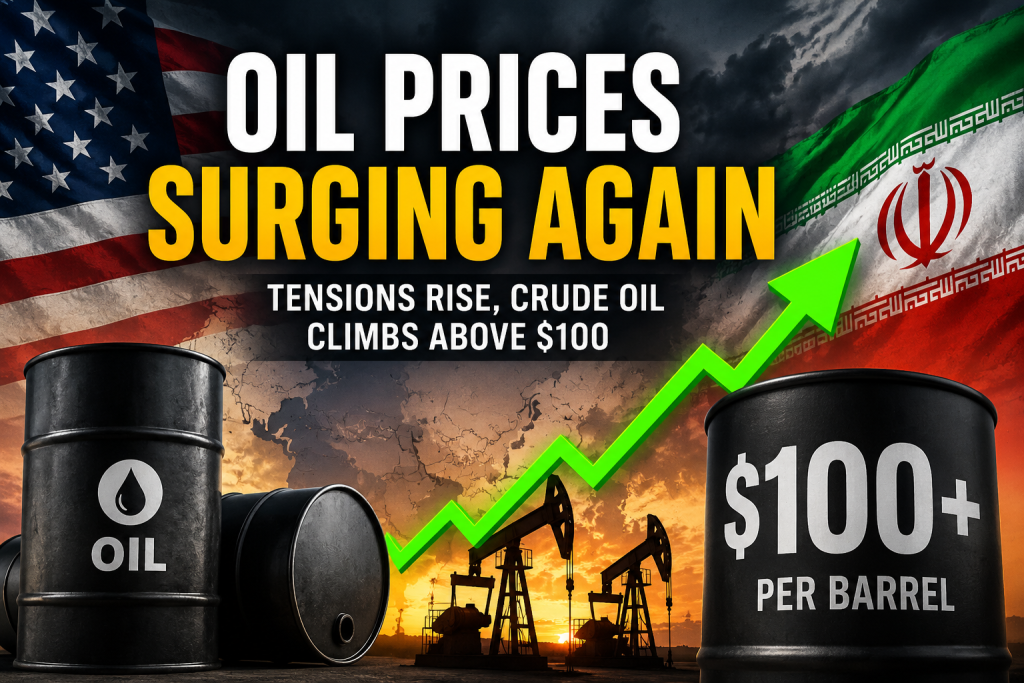
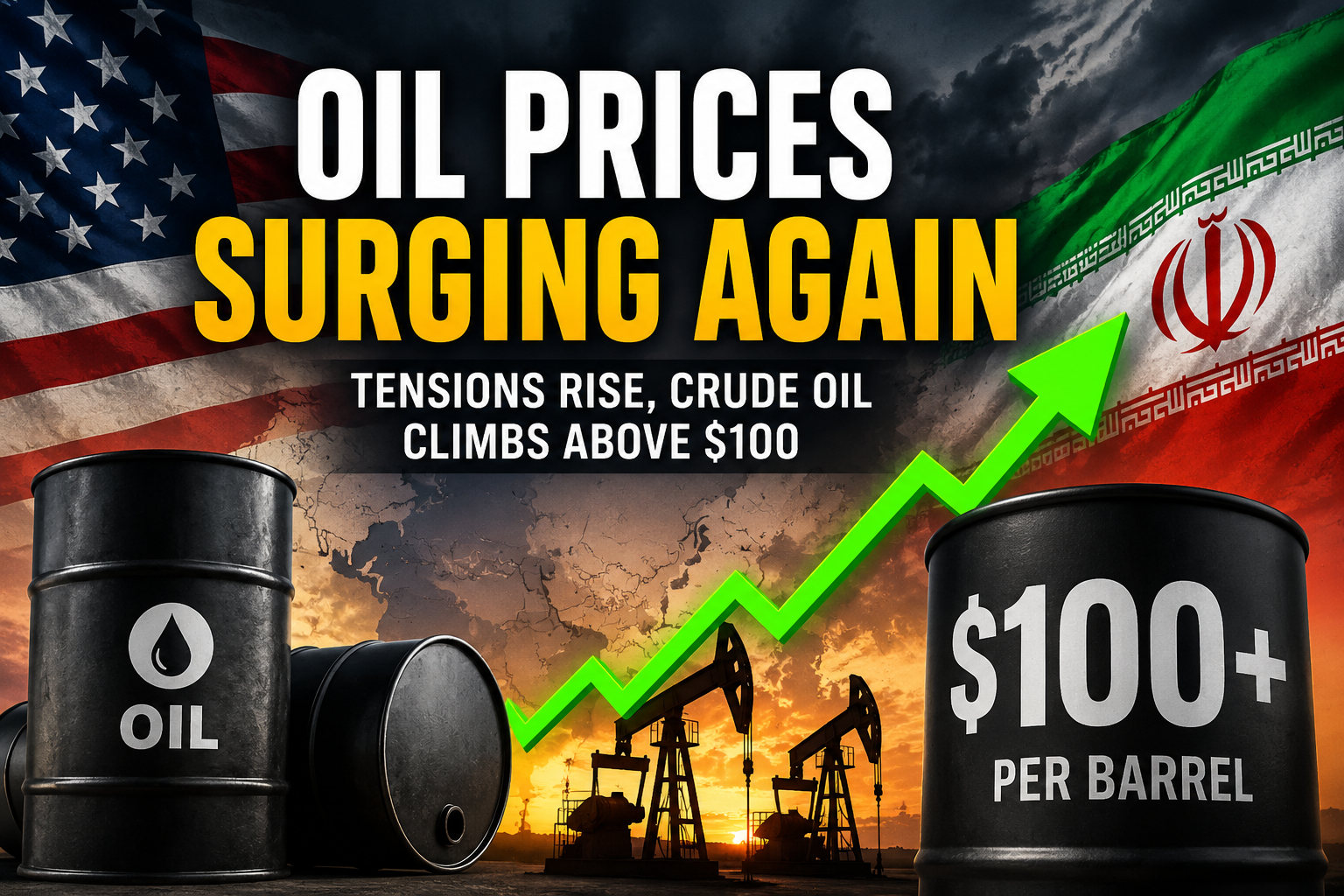
Global oil prices are rising sharply again, with crude oil moving above the $100 per barrel level. The main reason behind this surge is growing tension between the United States and Iran, especially around the Strait of Hormuz — one of the world’s most important oil shipping routes. Traders fear that any disruption in supply could create a global energy shortage.
Why Oil Prices Are Rising
The oil market reacts quickly to geopolitical tensions. Right now, investors are worried that the conflict in the Middle East could affect the movement of millions of barrels of oil shipped daily through the region.
The Strait of Hormuz handles nearly 20% of global oil supply, making it one of the most important routes for the energy market. Any threat to this route immediately pushes oil prices higher as traders expect reduced supply and higher demand pressure.
Recent failed peace talks between the U.S. and Iran have increased uncertainty, causing both Brent crude and WTI oil prices to climb rapidly above the psychological $100 level.
What This Means for Global Markets
Higher oil prices affect almost every sector of the economy. When energy becomes more expensive:
- Transportation costs increase
- Inflation rises
- Airline and manufacturing companies face pressure
- Consumers pay more for fuel and goods
At the same time, energy companies and oil-producing countries often benefit from higher prices.
Stock markets have also become more volatile because investors are watching every new headline related to the conflict.
What Traders Should Watch
For traders, oil has become one of the hottest markets right now. Price movements are being driven more by news and geopolitical developments than normal supply-and-demand data.
Key things traders are watching:
- Updates on U.S.–Iran negotiations
- Any disruption in the Strait of Hormuz
- OPEC production decisions
- Inflation data and central bank reactions
Oil markets are expected to remain highly volatile as long as tensions continue.
Final Thoughts
The latest oil rally shows how quickly geopolitical events can shake global financial markets. With crude oil trading above $100 again, traders and investors are preparing for more volatility ahead. If tensions continue to rise, oil prices could remain elevated for a long time, affecting currencies, stocks, inflation, and global economic growth.