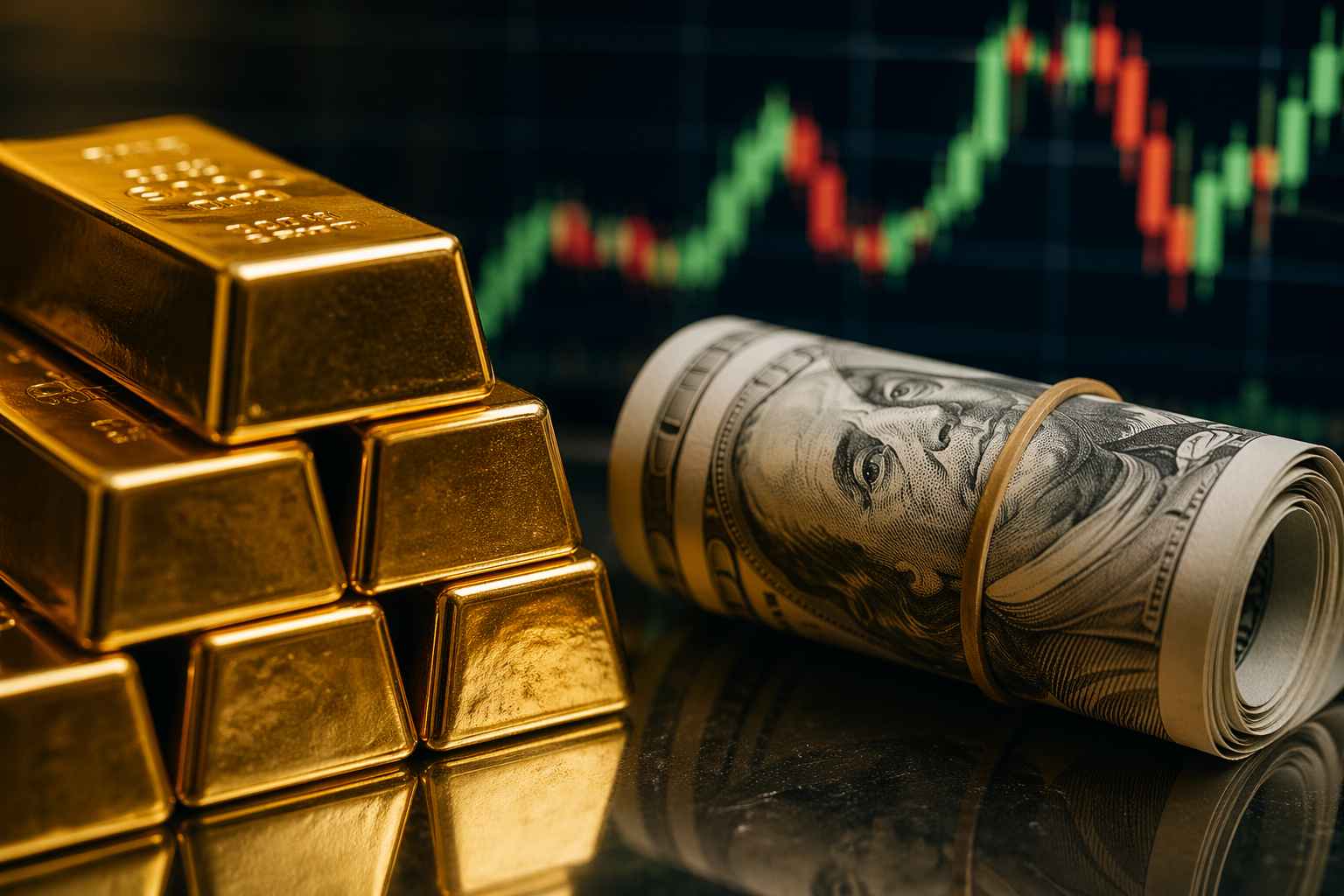
Gold has been one of the most closely watched assets in the financial markets this week. After reaching a more than two-month high following softer U.S. inflation data, gold pulled back as traders took profits and the U.S. dollar strengthened. On August 13, spot gold was down about 0.7% around $4,373 per ounce.
This movement provides an important lesson for traders: gold does not move on its own. The U.S. dollar, interest rates, inflation expectations and global economic conditions can all influence its price.
The Relationship Between Gold and the U.S. Dollar
Gold is generally priced in U.S. dollars. Because of this, movements in the dollar can have an important effect on gold.
When the dollar becomes stronger, gold can become more expensive for buyers using other currencies. This can reduce demand and put pressure on the price.
When the dollar weakens, gold can become relatively cheaper for international buyers, potentially supporting demand.
This is why traders often watch XAU/USD and the U.S. Dollar Index (DXY) together.
Why Did Gold Pull Back?
The recent move is not simply a story of a stronger dollar.
Gold had already climbed strongly after U.S. inflation data reduced expectations of an immediate Federal Reserve rate hike. Spot gold rose to more than $4,400 on Wednesday before retreating the following day as investors took profits.
The market is now paying close attention to what happens next with U.S. inflation and Federal Reserve policy.
Interest Rates Also Matter
Interest rates are another major factor for gold.
Gold does not pay interest or dividends. Therefore, when interest rates are high, investors may have more incentive to hold interest-bearing assets.
When expectations for lower interest rates increase, gold can become more attractive because the opportunity cost of holding it may fall.
Recent U.S. inflation data has changed expectations around the Federal Reserve. July CPI increased 0.1% month-on-month and 3.4% year-on-year, while core CPI rose 2.5% year-on-year. Market expectations for a September rate increase have fallen significantly.
What Traders Should Watch Next
For gold traders, several factors are particularly important:
1. The U.S. Dollar
A stronger dollar can put pressure on gold, while a weaker dollar can provide support.
2. Federal Reserve Expectations
Traders should pay attention not only to what the Fed does, but also to what markets expect the Fed to do next.
3. Inflation Data
Upcoming inflation reports can quickly change expectations about interest rates and move both gold and the dollar.
4. Geopolitical Risk
Global conflicts and uncertainty can increase demand for traditional safe-haven assets such as gold. However, geopolitical developments can also strengthen the dollar, meaning gold’s reaction is not always straightforward.
5. Profit-Taking
After a strong rally, some traders may close profitable positions. This can cause temporary pullbacks even when the longer-term market outlook remains positive.
What This Means for Forex and Gold Traders
The recent gold move shows why traders should avoid looking at only one chart.
If you trade gold, it can be useful to monitor:
Gold → Dollar → Interest rates → Inflation → Economic news
These markets and economic factors are connected.
For example, softer inflation may reduce expectations for higher interest rates, which can weaken the dollar and support gold. But if the dollar later strengthens because of other economic or geopolitical factors, gold can come under pressure.
Understanding these relationships can give traders a better view of what is happening behind the price movement.
Don’t Chase the Market
One of the biggest mistakes traders make after a strong move is entering simply because an asset has been rising.
Gold recently reached a new short-term high before pulling back. That is a reminder that even strong markets can experience corrections.
Instead of chasing price, traders should wait for a setup that matches their strategy and risk management plan.
Final Thoughts
Gold and the U.S. dollar have an important relationship, but there is no simple rule that says one must always rise when the other falls.
Interest rates, inflation, economic data, geopolitical events and investor positioning can all influence the market at the same time.
For traders, the lesson is simple: don’t trade the chart in isolation. Understand what is driving the market.
At AMEJTrading, we believe better trading starts with better market knowledge. Understanding the relationship between gold, the dollar and interest rates can help traders make more informed decisions and manage risk more effectively.