One of the most misunderstood concepts in trading is liquidity.
Many beginners believe the market is “against them” when price suddenly touches their stop loss and then moves in the original direction.
In reality, this movement is often connected to how liquidity works in the financial markets.
Understanding liquidity can help traders make smarter decisions and avoid common mistakes.
What Is Liquidity in Trading?
Liquidity refers to the availability of buyers and sellers in the market.
For large market participants to enter or exit trades, they need enough orders available.
In simple terms:
- Buy orders need sell orders
- Sell orders need buy orders
This flow of orders creates liquidity.
Where Does Liquidity Usually Sit?
Liquidity is commonly found:
- Above recent highs
- Below recent lows
- Around support and resistance zones
- Near obvious stop-loss areas
This is because many traders place their stop losses in similar locations.
Why Price Hunts Stop Losses
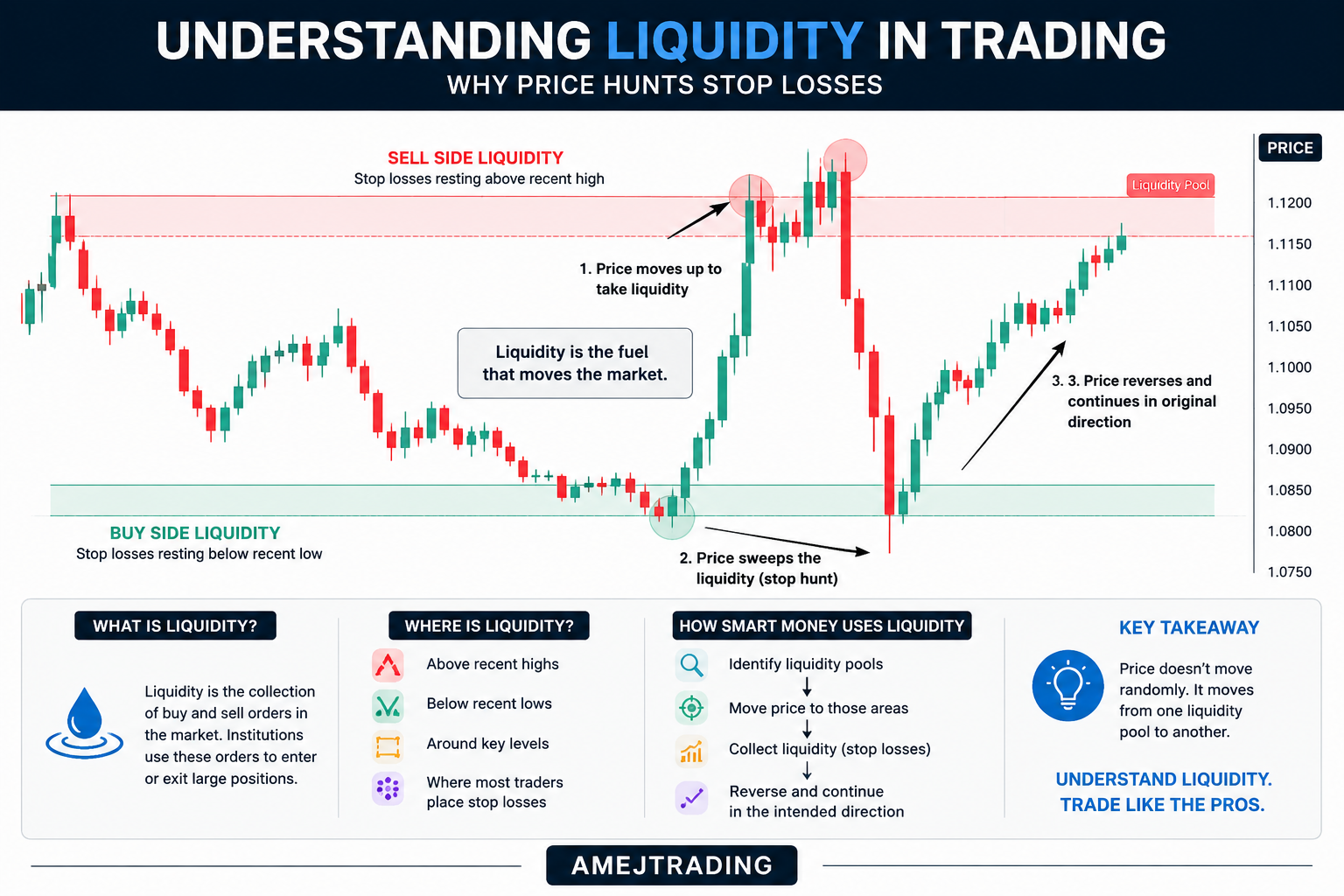
Price often moves toward areas where many stop losses are placed because those areas contain liquidity.
For example:
- Traders place sell stop losses below a support level
- Large market participants push price below that level
- Stop losses are triggered
- Liquidity enters the market
After collecting liquidity, price may reverse and continue in the original direction.
This is why traders sometimes feel the market “hunted” their stop loss.
Liquidity Is Part of Market Structure
The market naturally moves between areas of liquidity.
This behavior happens across:
- Forex
- Gold
- Crypto
- Stocks
- Oil
Understanding this helps traders stop reacting emotionally to normal market movements.
Common Mistakes Beginners Make
Many traders:
- Place stop losses too close to obvious levels
- Enter trades without understanding liquidity
- Panic during temporary price movements
This often leads to unnecessary losses.
How Smart Traders Use Liquidity
Professional traders:
- Identify liquidity zones before entering trades
- Avoid placing stops in obvious areas
- Wait for price confirmation
- Use proper risk management
Instead of fighting market movement, they learn how the market behaves.
Why Liquidity Matters in Modern Trading
In today’s fast-moving financial markets, liquidity is extremely important because:
- Large institutions move huge amounts of money
- Market makers seek efficient order flow
- Volatility increases around liquidity zones
Traders who understand liquidity often develop better timing and market awareness.
Final Thoughts
Liquidity is one of the foundations of market movement.
Price does not move randomly — it moves toward areas where orders exist.
Understanding why stop losses get triggered can help traders:
- Improve entries
- Reduce emotional trading
- Understand market structure better
At AMEJTrading, we encourage traders to focus on education, patience, and understanding how the market truly works.